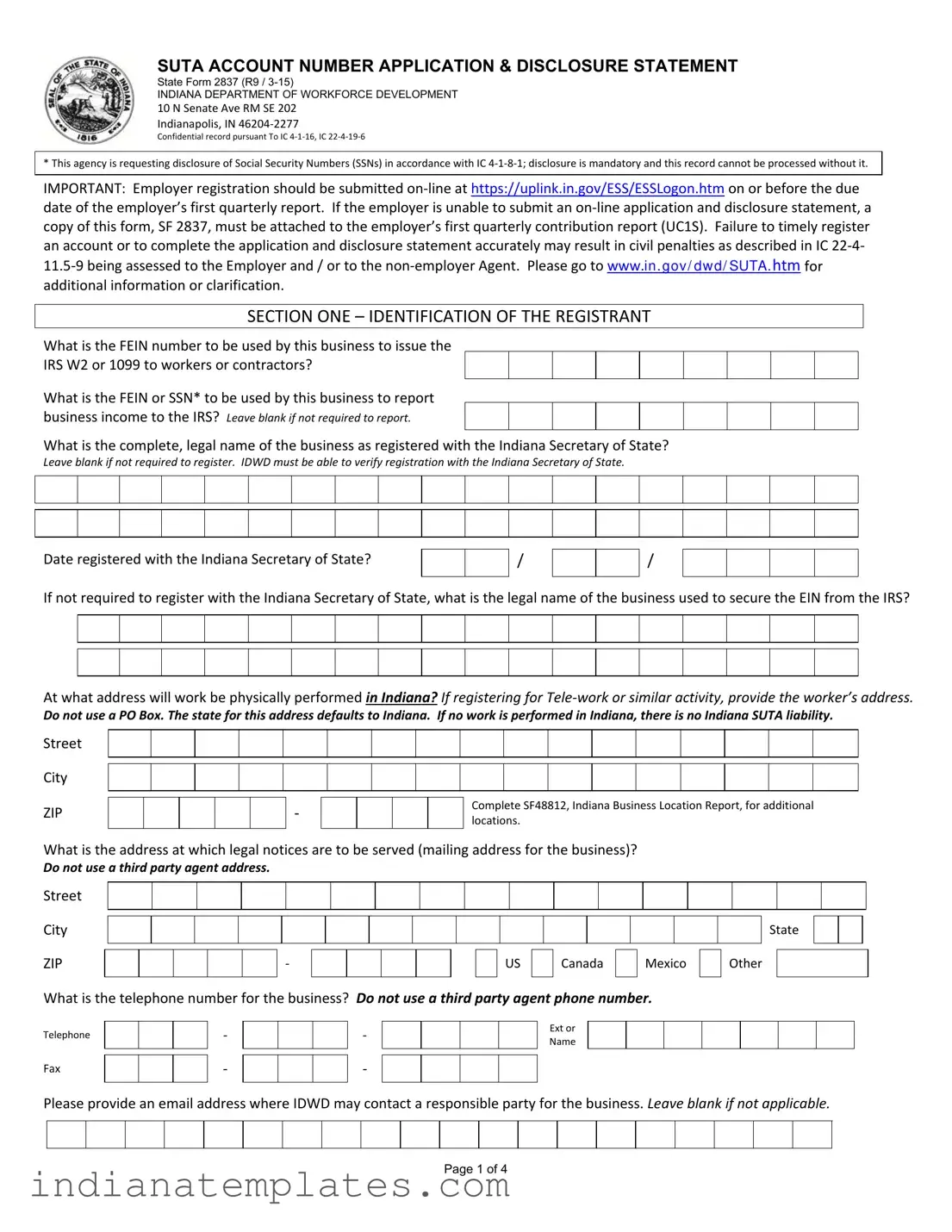
Fill in Your Indiana Sf 2837 Form
Similar forms
The Indiana SF 2837 form is similar to the IRS Form SS-4, which is used to apply for an Employer Identification Number (EIN). Both forms require detailed information about the business entity, including its legal name and address. The SF 2837 specifically focuses on state unemployment tax registration, while the SS-4 is a federal requirement. However, both forms necessitate the disclosure of Social Security Numbers for verification purposes. Completing either form accurately is crucial to avoid penalties or delays in processing.
Another document that shares similarities with the Indiana SF 2837 is the IRS Form 941, the Employer's Quarterly Federal Tax Return. This form is used to report income taxes, Social Security tax, and Medicare tax withheld from employee wages. Like the SF 2837, Form 941 requires accurate reporting of employee information and tax obligations. Both forms emphasize the importance of timely submission to avoid penalties, although they serve different tax purposes—state unemployment versus federal employment taxes.
The Indiana SF 2837 is also comparable to the Indiana Form UC-1, the Quarterly Contribution Report. This form is specifically for reporting unemployment insurance contributions owed by employers in Indiana. Both forms require the disclosure of the business's Federal Employer Identification Number (FEIN) and detailed information about the business operations. They are interrelated, as the information provided in the SF 2837 may directly impact the calculations made on the UC-1.
Another related document is the Indiana Business Entity Report (Form 49369). This form is filed with the Indiana Secretary of State to maintain the business's good standing. Similar to the SF 2837, it requires the legal name, address, and identification numbers of the business. Both forms play a role in ensuring compliance with state regulations, though the Business Entity Report focuses more on corporate status rather than tax obligations.
The Indiana SF 2837 can also be likened to the IRS Form 1099-MISC, which is used to report various types of income other than wages. Both forms require accurate identification of the business and its tax identification numbers. While the SF 2837 is focused on registering for state unemployment tax, the 1099-MISC is concerned with reporting payments made to independent contractors. Both forms emphasize the importance of accurate reporting to avoid penalties.
In addition, the Indiana SF 2837 is similar to the Indiana Employment Verification Form. This document is used to verify employment eligibility for workers in Indiana. Both forms require the disclosure of the employer's identification information and aim to ensure compliance with state regulations. They are essential for maintaining accurate records regarding employment and tax obligations, although they serve different purposes in the employment process.
To ensure a smooth transaction, consider using our streamlined Boat Bill of Sale template for Missouri which outlines the necessary details for the sale and protects both parties involved.
Lastly, the Indiana SF 2837 shares characteristics with the Indiana Sales Tax Application (Form ST-1). Both forms require the business to provide its legal name, address, and identification numbers. While the SF 2837 is focused on unemployment tax registration, the ST-1 is for sales tax collection. Both forms are critical for compliance with Indiana's tax laws and require accurate and timely submission to avoid penalties.
FAQ
What is the purpose of the Indiana SF 2837 form?
The Indiana SF 2837 form, also known as the SUTA Account Number Application and Disclosure Statement, is used by employers to register for a State Unemployment Tax Act (SUTA) account. This form collects essential information about the business, including its legal name, address, and federal employer identification number (FEIN). It ensures that the Indiana Department of Workforce Development can accurately track unemployment contributions and liabilities. Completing this form is crucial for employers who wish to comply with state regulations regarding unemployment insurance.
Who needs to fill out the SF 2837 form?
Any business entity that has employees in Indiana and is liable for unemployment insurance must complete the SF 2837 form. This includes various types of organizations, such as corporations, partnerships, and sole proprietorships. Additionally, specific entities like government agencies or 501(c)(3) organizations may also need to register, especially if they choose to voluntarily extend their unemployment coverage. If a business is unsure of its liability status, it is advisable to consult the guidelines provided by the Indiana Department of Workforce Development.
What happens if the SF 2837 form is not submitted on time?
Timely submission of the SF 2837 form is essential. If an employer fails to register their SUTA account or complete the application accurately, they may face civil penalties as outlined in state law. These penalties can be assessed not only to the employer but also to any non-employer agents involved. To avoid complications, it is recommended that employers submit the form online by the due date of their first quarterly report. If online submission is not possible, the completed form should accompany the first quarterly contribution report.
Where can I find more information about the SF 2837 form?
For additional details regarding the SF 2837 form and the registration process, employers can visit the Indiana Department of Workforce Development’s website. The site provides comprehensive resources, including FAQs, guidelines, and contact information for assistance. Employers are encouraged to review these materials to ensure compliance with all relevant unemployment insurance regulations and to clarify any uncertainties related to their obligations.
Common mistakes
Filling out the Indiana SF 2837 form can be a daunting task, and mistakes can lead to delays or penalties. One common error is failing to provide the correct Social Security Number (SSN). Since the form explicitly states that disclosure of SSNs is mandatory, omitting this information will result in the form being processed incorrectly. It is crucial to ensure that the SSN entered is accurate and matches the registrant's records.
Another frequent mistake involves not registering the business with the Indiana Secretary of State before filling out the form. The form requires the complete, legal name of the business as registered. If this name does not match the official records, it can lead to complications. Employers should verify their registration status to avoid unnecessary issues.
Many individuals also overlook the importance of providing a valid physical address where work will be performed. The instructions specify that a PO Box is not acceptable. This address is vital for determining the business's SUTA liability. Inaccurate or incomplete address information can result in miscommunications and delays in processing.
Additionally, people often misinterpret the qualification questions in Section Two. Each question is designed to capture specific types of employment situations. Selecting multiple qualifications or answering incorrectly can lead to incorrect assessments of liability. It is essential to read each question carefully and respond accurately to avoid confusion.
Another common oversight is failing to provide the date of the first payroll payment. This date is critical for determining the business's eligibility and compliance with state regulations. Without this information, the form may be deemed incomplete, leading to potential penalties.
Moreover, individuals frequently neglect to include the name and contact information of the person responsible for the business. This section is crucial for communication during audits or investigations. Incomplete contact information can hinder the state's ability to reach out when necessary, complicating matters further.
People sometimes also forget to sign the form, which is a critical step in the submission process. A missing signature can delay processing and may require resubmission of the entire form. It is advisable to double-check that all required signatures are present before submitting.
Lastly, failing to attach necessary documentation when indicating a transfer of assets can lead to severe consequences. The form explicitly requires supporting documents for any claims of asset transfer. Not providing this information can be considered a material misrepresentation, resulting in penalties.
By being aware of these common mistakes, individuals can better navigate the completion of the Indiana SF 2837 form, ensuring a smoother registration process and compliance with state requirements.
Indiana Sf 2837 Preview




Different PDF Forms
Financial Declaration Form Indiana - Respondents must disclose all sources of income, including child support and unemployment.
Indiana State Tax Return - Attach all relevant documentation and the application fee when submitting the form.
For those looking to understand the intricacies of trailer ownership transfer, utilizing a reliable resource can be beneficial. Exploring the UsaLawDocs.com provides valuable insights and templates that facilitate the drafting of a New York Trailer Bill of Sale, ensuring all necessary details are captured accurately to support a seamless transaction.
Indiana Department of Revenue Forms - The form asks whether the MEWA operates as a non-profit organization.